
Case Studies
Annotated examples of how different small-space growing environments are set up and managed. Each scenario illustrates the course principles applied to a specific real-world context.
These scenarios are composite examples drawn from common small-space situations. They're not idealized showcases — each includes the constraints and compromises involved, because that's what real growing looks like. The purpose is to show how course principles apply when the environment isn't perfect, which is almost always.
The Space
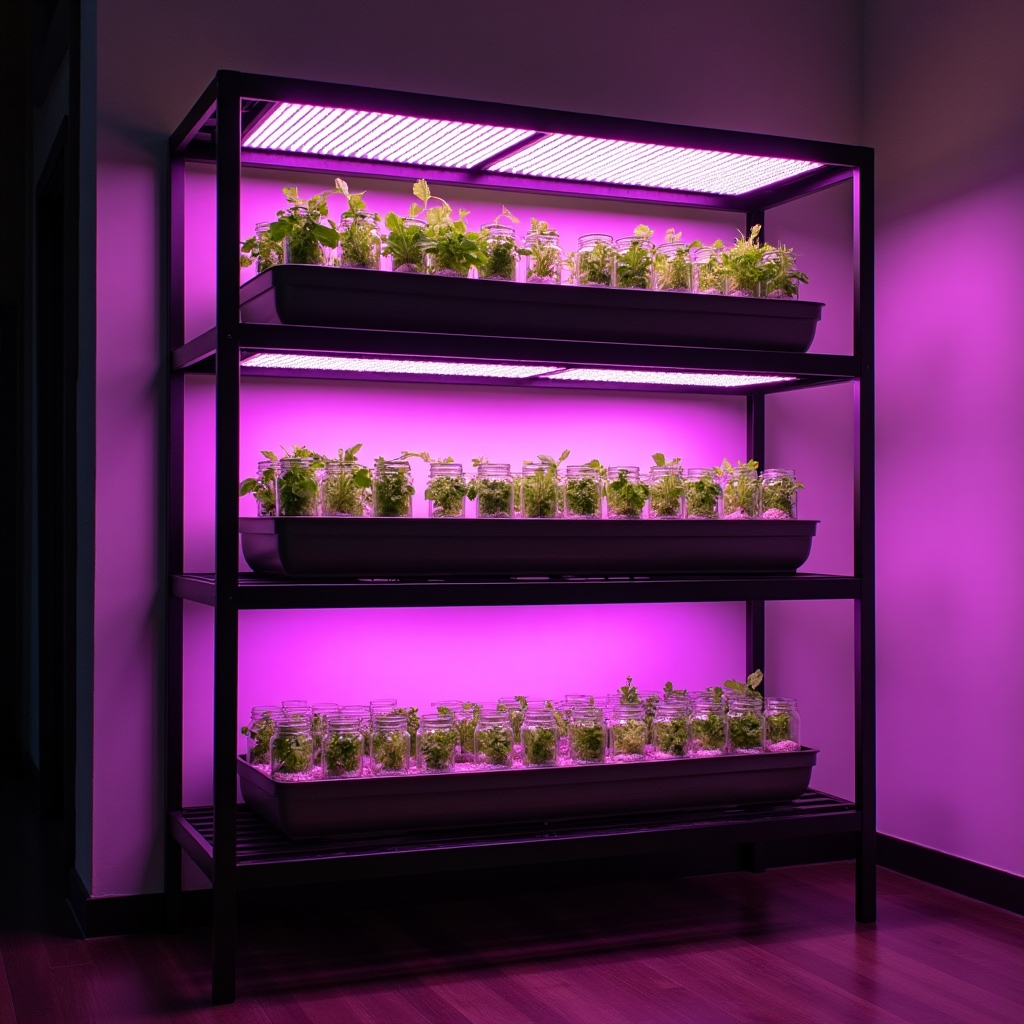
A 4m² north-facing balcony in a Gdańsk apartment block, receiving approximately two to three hours of indirect light daily. Temperatures drop significantly in autumn and winter. The decision was made to move growing indoors to a dedicated shelf unit against an interior wall.
The Approach
A three-tier metal shelving unit (1.2m wide, 0.4m deep) was fitted with two LED grow light strips per shelf. Kratky jars were chosen for their simplicity — no pumps, no electricity beyond the lights, no moving parts to fail. Crops selected were basil, mint, cilantro, and two varieties of lettuce.
What the Course Covers Here
Module 1 (space assessment) identified the light deficit. Module 2 led to Kratky as the appropriate system. Module 5 covered the grow light selection — specifically the spectrum ratio and wattage needed for the shelf depth. The troubleshooting module was referenced when basil began showing interveinal chlorosis, traced to iron lockout from pH drift.
Key Lessons
- Kratky works well for herbs and lettuce but requires weekly pH checks as solution volume drops
- Shelf depth (40cm) was limiting for larger grow lights — angled placement solved the hotspot issue
- Mint spreads aggressively and should be isolated from other herbs in the same reservoir
- Cilantro bolts quickly under continuous light — 14/10 photoperiod recommended
The Space
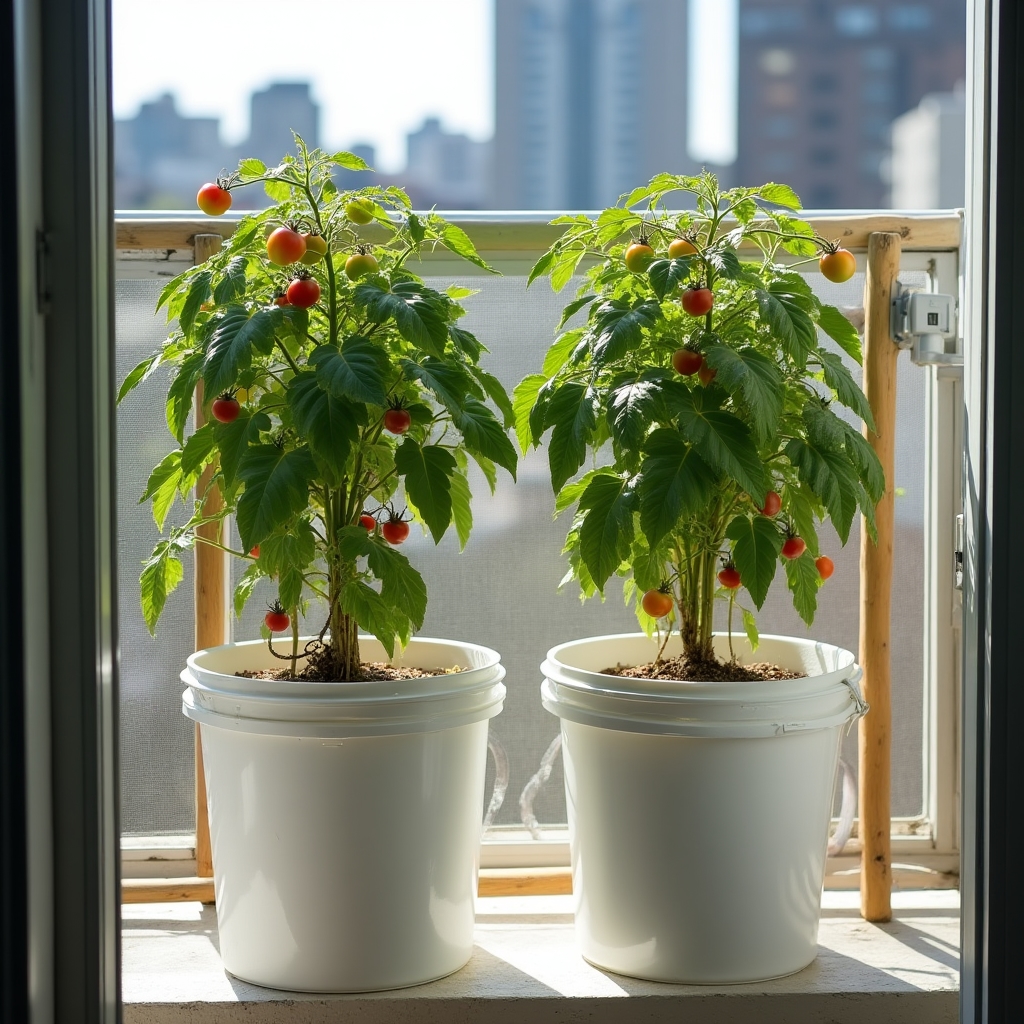
A 6m² south-facing balcony on the fourth floor, receiving six to eight hours of direct sun in summer. Wind exposure was significant — the balcony had no side screens. The space had a concrete floor with a drainage channel.
The Approach
Two 20-litre DWC buckets were set up, each growing one cherry tomato plant and one dwarf pepper. An air pump with two airstones ran continuously. A simple mesh screen was installed along the balcony railing to reduce wind stress on plants.
What the Course Covers Here
Module 1 flagged wind as a key variable — a factor often overlooked in balcony assessments. Module 3 covered cherry tomato variety selection (compact indeterminate types) and the support structure needed. Module 4 was central: DWC for fruiting crops requires more precise nutrient management than leafy greens, with distinct vegetative and flowering-stage ratios.
Key Lessons
- Wind screen reduced leaf damage and significantly improved fruit set
- Reservoir temperature rose above 24°C on hot days — a white bucket cover reduced this
- EC needs to increase during flowering — this is covered in Module 4 but easy to overlook in practice
The Space
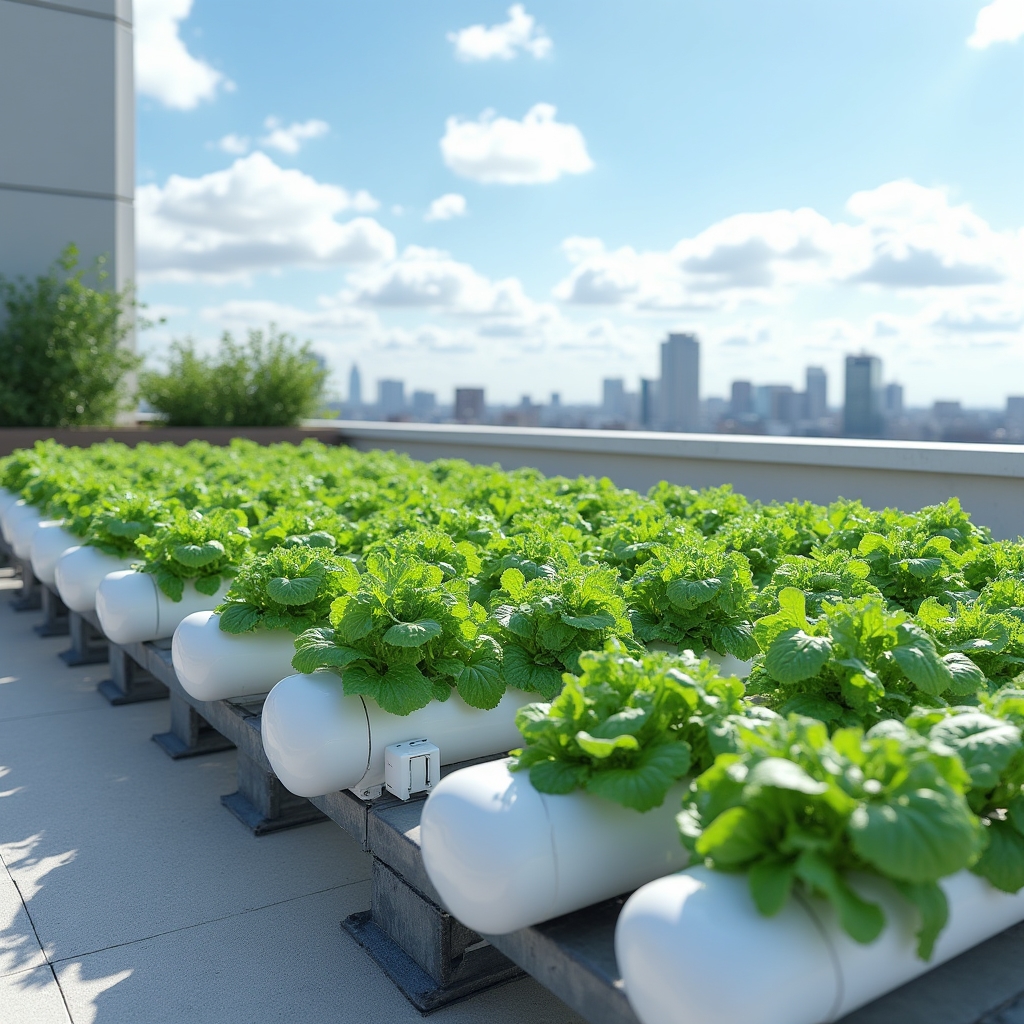
A 15m² accessible rooftop terrace in a residential building. Full sun exposure for most of the day. Load limit assessment (from a building engineer) confirmed the area could support the planned setup. Wind was present but manageable with low-profile systems.
The Approach
Four NFT channels, each 2m long, were installed on a slight slope using a simple PVC framework. A small reservoir and submersible pump circulated nutrient solution through all channels. Crops: three varieties of lettuce, spinach, and arugula. Staggered planting was used to create a continuous harvest cycle.
What the Course Covers Here
Module 1's load limit section was directly relevant here — rooftop weight distribution is a genuine safety consideration. Module 2 covered NFT mechanics in detail. The staggered planting schedule is explained in Module 3 as a technique for continuous production rather than single-batch harvests.
Key Lessons
- NFT channels require consistent power — a brief pump failure can dry roots within hours
- Staggered planting (two-week intervals between channel plantings) creates a more manageable harvest rhythm
- Rooftop sun intensity can cause nutrient solution to evaporate faster than expected — daily top-ups were needed in July
- Arugula bolts faster than lettuce in high heat — positioning near any available shade helps
Your Setup Is Next
The course gives you the framework to work through your own space systematically — whatever its constraints happen to be.
View the Course Modules